
RBI seen cutting repo rate 25 bps on Sept 29, says a poll
The specifics will also cover what's fit and proper to be a chest manager; the insurance and re-insurance aspects; and the new capital threshold, which is Rs 100 crore now.
Rajan drew attention towards the Nachiket Mor committee on PSL and said that the RBI is trying to make the entire process more effective.
CII suggested the policy measures required to ease the tight liquidity situation by cutting CRR by at least 50 basis points.
RBI said the outlook for economic growth for 2016-17 has turned uncertain after the unexpected loss of momentum by 50 basis points in Q2 and the effects of the withdrawal of banned notes

Bond markets, global as well as domestic, are likely headed towards hard times over the next three to six months, as higher vegetable prices, rising fuel costs, and improved wages may keep inflation hot, believe analysts, who expect the yields to hit 7.5 per cent in the near-term from the current 7.234 per cent. In this backdrop, they suggest investors can put in money in funds/instruments with residual maturity of 4 to 6 years, while longer-term investors can allocate cautiously to the longer end in the range beyond 7 years.

The year 2015 is likely to see lower rates to support growth and the Reserve Bank is expected to cut key policy rates by 0.25 per cent in February's monetary policy review meet, says a Bank of America Merrill Lynch report.

Retail depositors are earning negative returns on their bank deposits and hence, there is a need for reviewing taxes on interest earned, economists at the country's largest lender SBI have said. If not for all the depositors, the taxation review should be carried out for at least the deposits made by senior citizens who depend on the interest for their daily needs, the economists led by Soumya Kanti Ghosh said in a note, which pegged the overall retail deposits in the system at Rs 102 lakh crore. At present, banks deduct tax at source at the time of crediting interest income of over Rs 40,000 for all the depositors, while for senior citizens the taxes set-in if the income exceeds Rs 50,000 per year.

Bank of America Merrill Lynch on Monday trimmed India's economic growth estimates by 30 basis points to 7.1 per cent for the current fiscal, while global financial services giant Morgan Stanley downgraded its GDP growth forecast for the current fiscal to 7.3 per cent from the earlier 7.7 per cent.

Unless RBI temporarily relaxes the norms on recognising of bad loans, the pressure on this front could rise in the December quarter.

If you pledge market-linked instruments and their value plummets, you will have to provide additional collateral, points out Sanjay Kumar Singh.

Services sector activities improved further and touched a five-month high in April driven by a surge in incoming new work orders that boosted business activity and supported a renewed increase in employment, according to a survey. The seasonally adjusted S&P Global India Services PMI Business Activity Index jumped to 57.9 in April, from 53.6 in March, highlighting a sharp rate of expansion that was the fastest since last November amid mounting price pressures. For the ninth straight month, the services sector witnessed an expansion in output.

RBI on Monday conducted an unprecedented level of liquidity infusion to the tune of Rs 3.3 lakh crore, in which banks bid for as much as Rs 4.5 lakh crore. The central bank said it would conduct a liquidity infusion auction of Rs 1 lakh crore on Tuesday as well, to help banks tide over the liquidity crisis.

ICICI Bank and SBI were among the top Sensex gainers along with FMCG majors ITC and HUL.

Only borrow an amount that can be repaid comfortably. The ratio of total EMI to take-home salary should not exceed 40 per cent.

Economic growth has slipped to a six-year low of 5 per cent for the June quarter and is expected to turn in lower than that in the September quarter. Lack of consumption is seen as one of the key factors pulling down growth.

The Reserve Bank of India has already reduced the policy rate by a total of 75 basis points, or 0.75 per cent, since January.

HDFC Bank, the country's largest private-sector lender, lost to competition wholesale loans of around Rs 50,000 crore after it increased interest rates in May, said Chief Financial Officer Srinivasan Vaidyanathan in an analyst call. "There were some customers who were offered lower rates by other market participants. "But we decided not to cut back on our rates," he said while addressing analysts after the announcement of the bank's Q1 earnings.

The S&P BSE Sensex shed 286 points to close at 24,539 and the Nifty50 lost 100 points to end at 7,456.

Any liquid money that gold replaces for CRR or SLR compliance will allow banks to use this 'extra' cash for lending to borrowers

Aditya Birla Nuvo gets board's nod, Videocon submits application.

RBI has, since January, cut its policy rate four times.

Much depends on how the liquidity situation evolves over the coming months, with greater clarity expected from the next monetary policy meeting scheduled for December 7.

RBI Governor Shaktikanta Das on Thursday said financial inclusion will continue to be a "policy priority" for the central bank to make the post-pandemic recovery more equitable and sustainable. The Reserve Bank of India will very soon be coming out with the first financial inclusion index, which will assess progress in terms of access, usage and quality, Das said, while speaking at the Economic Times Financial Inclusion Summit. It is the responsibility of all stakeholders to ensure that the financial ecosystem (including the digital medium) is inclusive and capable of effectively addressing risks like mis-selling, cybersecurity, data privacy and promoting trust in the financial system through appropriate financial education and awareness, he added.

The Reserve Bank of India (RBI) kept its key policy repo rate unchanged at 8.0 percent on Tuesday, as widely expected, while expressing concerns about risks to its target to bring consumer inflation down to 6 percent by January 2016.

Delivering a public speech hours after the RBI launched a rescue act for Yes Bank on March 6, Governor Shaktikanta Das reiterated the RBI's affirmation to do whatever was needed to combat the coronavirus impact. On that day, India had only one confirmed COVID-19 infection, the World Health Organisation was five days off from declaring it as a pandemic and the financially debilitating lockdowns were not even on the horizon. Das' promise on efforts to mitigate COVID-19 impact appeared as a footnote in news reports from the event.

The RBI has made serious attempts to improve fiscal deficit.

After two surprising, successive rate cuts in January and February 2015, RBI governor Raghuram Rajan decided not to reduce them further in his first policy announcement in the new financial year. Is he playing spoilsport for consumers of homes and cars?

The central bank had nudged banks to cut lending rates.
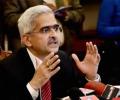
The Reserve Bank of India (RBI) has approved a three-member committee of directors to run the day-to-day functioning of cash-strapped Lakshmi Vilas Bank.
.jpg)
The Reserve Bank on Monday warned lenders against outsourcing their credit processing activities to third-party entities.

Sectoral performance was mixed with media and PSU banking stocks attracting buyer interest and healthcare, FMCG and metal stocks bearing the brunt of the bears

While banks are not as exposed as the corporate sector during the initial stage of the pandemic, the strain on lenders could ultimately be profound. Banks face a second-order hit compared with the corporate and household sectors.

Concerned over inflationary pressures in the economy, the Reserve Bank of India (RBI) is bringing down surplus liquidity in the system rapidly. It has fallen to pre-Covid levels and almost 2 per cent of banks' net demand and time liabilities (NDTL). NDTL shows the difference between the sum of demand and time liabilities (deposits) of a bank (with the public or the other bank) and the deposits in the form of assets held by the other bank.

PS banks need to pull up their socks to improve cash flows.

Finance Minister Nirmala Sitharaman has said the recent interest rate hike by the Reserve Bank was not surprising for her but the timing was, asserting that the rising cost of funds will not impact the government's planned infrastructure investments. For the first time since August 2018, RBI had on May 4 delivered a blunt 40 basis points increase in key repo rate to 4.40 per cent, and also hiked the cash reserve ratio by 50 basis points to 4.5 per cent after an unscheduled meeting of the rate setting panel, citing increased inflation pressures following the Ukraine war and the resultant spike in crude oil prices. Retail inflation printed at 6.9 per cent in March and the April reading is forecast to top 7.7 per cent.
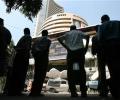
The 30-share Sensex ended up 12 points at 28,517 while the 50-share Nifty ended nearly unchanged at 8,660.

Foreign investors have pulled over Rs 6,400 crore from the Indian equity market in the first four trading sessions of the ongoing month when the Reserve Bank of India (RBI) and US Federal Reserve raised interest rates. Given the headwinds in terms of elevated crude prices, inflation, tight monetary policy among others, FPIs' flows in India are expected to remain volatile in the near term, Shrikant Chouhan, Head - Equity Research (Retail), Kotak Securities, said. Foreign Portfolio Investors (FPIs) remained net sellers for seven months to April 2022, withdrawing a massive amount of over Rs 1.65 lakh crore from equities. This was largely on the back of anticipation of a rate hike by the US Federal Reserve and due to the deteriorating geopolitical environment following Russia's invasion of Ukraine.
.jpg)
BSE auto index surged 2%, capital goods, healthcare and oil & gas indices also up.

Joy Thomas stated that one large account -- HDIL -- was the sole reason for the present crisis that led to the regulatory action on Tuesday when Reserve Bank of India superseded its management and placed it under an administrator for the next six months.
